Showing posts with label Politics. Show all posts
Showing posts with label Politics. Show all posts
Saturday, December 27, 2008
Cevapcici western
There was a land
A land of champions
A land called Yugoslavia
And it's been the ruin of many a poor boys
And god I know I'm one
Oh mother, tell your children
Not to do what I have done
I've lost my soul, on glory alleluyah
Down in Yugoslavia
Land of Champions, Magnifico


Wednesday, December 24, 2008

Wednesday, December 17, 2008
Women in the Netherlands - what they think

After my old (and very succesful) post about the women in the Nederlands, and more specificaly, on the marvellous invention of the plastuit, here I am again, after a Women Lunch, a good occasion to see and to hear about the reality of women in the Netherlands (and actually, all over Europe and beyond).
The idea started by two women researchers in our institute that wanted to share their experience with the younger girls in the same field and have some feedback on how life's going. I am always been very committed to these kind of subjects, as on one side I don't understand how it is possible that among all the discriminations that the human being has done during history, the one on women is the most prolonged and fundamental one, that has held strongly along centuries, that exists in every culture, north and south, east and west, no matter which religion, no matter in which time it is, the discrimination on women has always been present. On the other hand, it is also clear that it is the discrimination that has been most accepted by the victim herself. Many women not only accept it, but are actually proud of being not considered at the same level as men. Well, the discussion of today was much more practical (being Dutch, we may say :-) ) and it was focused mostly on how the society helps women with a family and how it is accepted to have women in high position in a company or in science. Well, I heard a lot of complaints indeed! When I said that surely The Netherlands is not the top, but is not so bad either, I have been answered that statistics shows that women in the Netherlands works less than in the rest of Europe. So I have checked on internet, and what I found is that here 75% of the women are working part time, against the 31% of the European average. Well, it is true that probably the tradition is such that women are more likely than men to stay at home to take care of the children and the house, but if you look more carefully, also the percentage of men having a part time job in The Netherlands is way bigger then the European average. In practice, people work less, because a part time salary is very often enough to have a nice life. Well, one can argue that is often not a choice because there is a lack of childcare, and that's true, but is also true that having a part time job is not a bad thing by definition. Also because part time is not defined. Some people work at 50%, some people at 90% of the full time. The average is around 80%. And often it is for a nice and managerial kind of job. Also, I think that the main reason why in Holland you see so many women discriminations or related problems, it is because women are free to talk about it, they want to express it. I think the number of housewives in Italy is just scary, and of course all these women staying at home, claiming that taking care of the house is just as any other job, and chit-chatting with ladies friends agains men and their housband is not the right mood to fight against male chauvinism. Actually it is just a good reason to become even more chauvinist. At the end The Netherlands is a country that has chosen as main value the eguality among people, and is one of the main supporters of the CEDAW ( Convention on the Elimination of All Forms of Discrimination against Women) so I think that it may look a bit paradoxal, but the fact we can complain so much about the situation of women in the Netherlands is actually a sign of a better position of the women here then in other places. It is nevertheless true that everywhere, we are very very far from reaching the same rights and the same treatment then our male collegues, and even if it may be not very useful, it is always good to talk about that and let people reflect about this.
Friday, November 28, 2008
Smoke under the water
There is an urban legend in Holland saying that Dutch people don't like bans, and the only way to let them follow a certain rule is to explain them its social utility.
I'm not sure if this is true, or if this is the case, but the smoking ban active in The Netherlands is definitely facing some comportamental problems.
It all started on July, 1th 2008, when also The Netherlands, one of the last Country in Europe to decide so, started to ban smoking tobacco from public closed places such as bar or restaurants.
In the Country of free Marijuana this sounded a bit weird (even if this is actually one of the few places where you could create some legal smoking rooms for almost all kind of smokers) and protests started as soon as the law was enforced.
On July, 15th dutch Café owners started to join a new religious movement called One and Universal Smokers Church of God whose worshippers are said to believe in the trinity of smoke, fire and ash and honour their god by smoking.
Dozens of bars owners asserted the Dutch constitution and European rules give it legitimacy under the right to freedom of religion.
But the government went on and the police started to give fines to those bars that let their costumers smoke inside.
Unfortunately the fine was not so high (300€ for the owner, nothing for the costumer) and it wasn't enough to persuade the bar owners.
What happened is that in many places owners put next to the door some collecting box, where costumers can throw some coins, to help pay for the potential fine.
In response, Health Minister Ab Klink decided to get tough.
In the future, he proposed, violations of the ban have to be treated as economic offences which would allow the authorities to impose fines as high as 16000€.
A lot of owners of cafes then started to strike, especially in the South.
Groups of cafe owners in cities such as Groningen, Tilburg and Breda have already agreed informally to ignore the ban.
Last weekend, cafe and bar owners in Den Bosch decided en masse to ignore it.
The war has started.
29 bars were sanctioned last weekend only in Den Bosch, while the minister announced that cafes which continue to defy the ban will be closed down for breaking competition laws (because they compete unfairly with cafes which are not breaking the law).
We'll see who'll win.
Sunday, November 16, 2008
Waterschapsverkiezingen 2008

It's been already two and a half years since when I became part of the (second) Italian diaspora.
And since a while I started to think if it was morally right for me to start being interested in Dutch politics rather than keep voting at my homeland elections.
The pragmatic me suggests that Italy needs more help than Holland, by looking how things were going on during the last 14 years; the idealistic me (which I tend to follow most of the times) claims instead that it's unfair to leave a Country in search of better opportunities abroad, but still wishing to interfere with its politics.
Moreover the pain-in-the-ass me states that technically I'm due to be represented here in The Netherlands since I'm paying taxes for this Country since a while.
So the metamorphosis started.
And the opportunity came by post.
We in fact just received an envelop with the ballots and the list of candidates to partecipate at the elections for the Waterschap.
The waterschappen (Dutch for water boards) are regional governament bodies in the Low Countries.
They are charged with defending The Netherlands from water by maintaining the integrity of the water defenses around the polders, managing water barriers (dunes, dikes, quays and levees), waterways, water levels and the water quality in their regions.
Having to do with water, you can easily feel the importance of these institutions (25% of the Country is below sea level, and three main rivers cut the land in many wet slices). In fact they are among the oldest forms of local government in the Netherlands, some of them having been founded in the 13th century.
Waterschappen hold separate elections, levy taxes and function independently from other government bodies.
There are 27 waterschappen in The Netherlands covering the whole territory. The Hoogheemraadschap Amstel, Gooi en Vecht is the waterschap governing Amsterdam region and it's this the one we're going to vote for.
The general structure of these institutions consist in a general administrative body (elected by people), an executive board (elected by the administrative body) and a chairperson (appointed by the government), also called dijkgraaf, the Count of the dikes (cool, isn't it?).
Actually, asking around to some friends of mine it turned out that among common people nobody really cares about these elections and that it's just "another political charge".
Nevertheless I'll try to find out the differences between the candidates and start being interested in dutch politics.
Maybe also here there is someone that believes that Obama is tanned.
Wednesday, November 12, 2008
The Abilene paradox
On a hot afternoon visiting in Coleman, Texas, the family is comfortably playing dominoes on a porch, until the father-in-law suggests that they take a trip to Abilene (53 miles north) for dinner. The wife says, "Sounds like a great idea." The husband, despite having reservations because the drive is long and hot, thinks that his preferences must be out-of-step with the group and says, "Sounds good to me. I just hope your mother wants to go." The mother-in-law then says, "Of course I want to go. I haven't been to Abilene in a long time."
The drive is hot, dusty, and long. When they arrive at the cafeteria, the food is as bad as the drive. They arrive back home four hours later, exhausted.
One of them dishonestly says, "It was a great trip, wasn't it." The mother-in-law says that, actually, she would rather have stayed home, but went along since the other three were so enthusiastic. The husband says, "I wasn't delighted to be doing what we were doing. I only went to satisfy the rest of you." The wife says, "I just went along to keep you happy. I would have had to be crazy to want to go out in the heat like that." The father-in-law then says that he only suggested it because he thought the others might be bored.
The group sits back, perplexed that they together decided to take a trip which none of them wanted. They each would have preferred to sit comfortably, but did not admit to it when they still had time to enjoy the afternoon.
Thursday, November 06, 2008
Are Americans better then Italians?

Well, from a first glance, it would look like yes, they are. But maybe Obama is so good that he can even explain us that maybe it is not true. He said, just after being elected:
"Today the American people have made their voices heard, and they have said, 'Things are finally as terrible as we're willing to tolerate, to elect a black man, in this country, and at this time—these last eight years must have really broken you."
Yes, probably he is right. The situation in the U.S. is now much worse then in Italy, even considering Berlusconi and his mafia/massonic connections. At least, americans are much poorer then we are. Not because of our great way of doing economy, hell no, but because we have Europe to save our ass. God Save Europe. And we don't even realize that.... but this is another story. The point is that I am very happy of this election result, and I am very happy for my american friends, they can rely on the fact that they are not surrounded by completely helpless people, but it is still possible to change things. Nevertheless, I would like to strike a blow in favour of the Italians, and say that we are very far of having such an alternative and vote for somebody like Obama. Maybe if we could, we would also do it. Maybe.
Anyway, I am not sure that he will really change things as much as we europeans are expecting him to do.... but hope is last to die, so let's see if he can astonish us and change the western world in a different way of the one is happening now (the decline of America and the rise of the East, hopefully, but unfortunately unlikely, with the hand of Europe).
For the moment my main hope is that Europe will keep a look of what happened in the U.S. in the last 10 years and learn the lesson, and stop voting for right wing populistic non-political people.....
BTW, last glance to who has led U.S. in such a disastrous situation:
In a press conference held this morning on the White House lawn, President Bush formally asked the assembled press corps and members of his own administration if, in light of today's election, he could stop being the president now. "So it's over, right? Can I stop being president now?" Bush said after striding to the podium in a Texas Rangers cap and flannel shirt, carrying a fully packed suitcase. "Let's just say I'm done as of now. Presidency over." When informed by Washington Post reporter David Broder that his presidency would continue through early January, Bush stared at him quizzically, sighed, and shuffled silently back into the White House.
Poor him, would you please leave this poor guy alone, to run behind the cows and stop forcing him (hopelessly) to think???????
Wednesday, October 29, 2008
Gelli Beans

Once upon a time there was a pseudo democratic Country called Italy.
It was located at the very border of the Free Western Empire and because of that it was very much subject to the risks coming from the bordering Evil Red Empire.
Since the inhabitants of this Country didn't completely agree on which side to support, the ruling Free Western Empire had to spent a huge effort (both in economical and political help) to keep the Country under its influence sphere.
As a consequence the political life of the Country stayed for 50 years frozen in the hands of the Christian Democracy party, while safety and stability where assured by precise and harsh actions led by some governament guided right-wing paramilitary groups.
This worked for a while, but later it became clear that it was more easy, in order to keep the power over the Country, to fill all the society spheres with trusted men rather than facing the Evil Empire with direct brutal force.
In this Country was living a Venerable Master.
He was a peculiar character: during the last war he used to play for both fascist and anti-fascist sides (even if he preferred the first one), while right after the war he started collaborating with the Free Western Empire intelligence service, and then ended up being at the intelligence service of his own Country.
Someone claims it was this Venerable Master that helped the Empire in building a thick control net over the Italian society, using his acquaintances in the Freemansonry world.
His covert lodge was very powerful and it included very important state officers, politicians (also ministers and deputies), military officers.
The aim of the network was to subvert the political order in Italy and lead eventually to an authoritarian turning by steps: creation of two big parties, gain control over the media and judges, ask for constitutional reforms, bench reform, abolition of provinces and study qualifications.
"Unfortunately" the network was discovered after five years and the lists of associates were made public.
Notably, the then future Italian prime minister Silvio Berlusconi was on the list.
A couple of times the Master had something nice to say about him: "The real power lays in the hands of who control the Media", "All is becoming a reality little by little, piece by piece. To be truthful, I should have had the copyright to it. Justice, TV, public order. I wrote about this thirty years ago..." or "Berlusconi is an extraordinary man, a man of action. This is what Italy needs: not a man of words, but a man of action."
Today, after 25 years, our Venerable Master has been asked to go public and to run a TV program, Venerable Italy, where he's going to teach Italian history, from the Fascism to these days.
Special guests for the first episode will be controversial former Italian Prime Minister Giulio Andreotti, and the co-leader of Berlusconi's Forza Italia party, Marcello Dell'Utri, convicted for collusion with the Mafia (pending appeal).
Together, they are going to explain us their version of Italian history.
Is this good or bad?
Is this a chance for enlighten people to see the real connections between present and past powers in Italy, or it's a sign that by now in this Country you can say whatever you want and full as many people as you can, telling them your own truth?
I'm not sure actually.
Personally I'm pretty interested in listen on what he has to say. It's more or less like to listen to the devil's teaching. He definitely knows a lot of our Country's dirty secrets and he's probably going to play with them.
I think the interesting thing will be to see who he's going to address his stories to.
Normal folk or non-disinterested politicians?
Anyways... they all lived happily ever after.
Tuesday, October 28, 2008
Francesco Cossiga on Democracy in Italy

On Thursday, October 23rd, commenting over S.Berlusconi's intimidation (denied righ after by he himself) to use police force against university demontrators in Italy, former President of the Italian Republic (and currently lifetime senator) Francesco Cossiga stated the following on an interview (here the original text):
President Cossiga, do you think that Berlusconi has gone too far in threatening the use of State force against the students?
That depends, if he believes he is the Prime Minister of a strong State then no, he was right. But as Italy is a weak State, as the opposition is no longer the rock-like PCI (Italian Communist Party, which changed name and broke up in 1991) but the evanescent PD (Democratic Party, led by Walter Veltroni, formed in 2007 from the remains of the old PCI together with other centre-left forces), I'm afraid that his words will not be followed by action and that Berlusconi will just end up with egg on his face.
What should happen now?
At this point, Maroni (Roberto Maroni (Lega Nord), current Home Minister) should do what I did when I was Home Secretary.
What's that?
Firstly, forget the high-school students... can you imagine what would happen if a 10-year-old kid got killed or seriously injured...
Instead, the university students?
Let them get on with it. Withdraw the police from the streets and the universities, infiltrate the movement with agents provocateurs ready for anything, and allow the demonstrators to run loose for a week or so, devastating shops, setting cars on fire and causing havoc in the streets.
Then what? Then, with public opinion on your side, the sound of ambulance sirens should drown out the sirens of police and carabinieri cars.
In the sense that...
In the sense that the forces of law and order should massacre the demonstrators without pity and send them all to hospital. Not arrest them - the magistrates would set them free straight away in any event... beat them bloody and beat the teachers storring them up bloody too.
The teachers, too?
The teacher above all. Not the older ones, of course... the young girls. Have you any idea of the seriousness of what's happening? There are teachers indoctrinating children and encouraging them to demonstrate - that's criminal behaviour!
But you realise what they would say in Europe after something like you suggest? "Fascism returns to Italy", they'd say.
Rubbish, it's the democratic way - put out the flame before the fire spreads.
What fire?
I'm not exaggerating when I say I truly believe that terrorism will return to bloody the streets of this country. And I wouldn't want people to forget that the Red Brigades (BR) were not born in the factories but in the universities. And that the slogans they used were used before them by the Student Movement and the trade union left.
So you think it is possible that history will repeat itself?
It's not possible, it's probable. That's why I'm saying: let's not forget that the BR were born because the flame was not put out in time.
Veltroni's PD is on the side of the demonstrators.
Look, I can't in all honesty see Veltroni taking to the streets and risk getting a cracked skull. You're more likely to see him in some exclusive club in Chicago, applauding Obama.
He won't take to the streets with a stick in his hands, sure, but politically...
Politically, he's making the same mistake that the PCI made when the troubles (The widespread progressive protest movement which began in the late 1960s) started: it backed the movement, deluding itself that it could control it, but when it too became a target, as was bound to happen, it soon changed its mind. The so-called hard-line adopted by Andreotti, Zaccagnini and me was suggested by Berlinguer (Leader of the PCI from 1972 to 1984)... But today we've got the PD, an ectoplasm led by another ectoplasm. And that's another good reason for Berlusconi to be more prudent.
Friday, October 24, 2008
Vedea ceffi di birro in ogni volto.

Yesterday the American Freedom Alliance, a right-wing US think tank, announced they were going to give an award to Geert Wilders, the Dutch anti-immigration politician sadly famous for his short film Fitna.
In the note it is said that the Freedom Award is given to individuals or organisations which defend world freedoms.
All this sounded to me pretty odd: you actually call Freedom to be against human rights?
I would say no, but it turns out that this word (freedom) is often used for right oriented political groups generally against basic freedoms.
There are six political parties in Europe recalling Freedom in their name; in most (but not all) of the case they mean individual freedom in economics, liberalism, but in all the case they are populist parties. This probably tells us that the word freedom is a bit abused in order to touch easy emotions of people by calling simple principles on which everybody has to believe.
The funny thing of this is in fact that all this so called freedom parties have in their declared intents the will of fighting freedom.
These are the parties:
1. Freiheitliche Partei Österreichs (FPÖ, Freedom Party of Austria): the populist and nationalist party held until 2005 by Jörg Haider, against asylum system, against EU policy in Austria, pro restriction in Austrian citizenship law, against Turkey in EU;
2. Frihedspartiet (FP, Danish Freedom Party): founded by the former pastor of Faderhuset evangelical church, Eivind Fønssagainst, against freedom of abortion;
3. Il Popolo della Libertà (PdL, Italian People of Freedom): the party by and with Silvio Berlusconi, against the freedom of being clever and Italian at the same time;
4. Partij voor de Vrijheid (PVV, Dutch Party for Freedom): led by the already mentioned Geert Wilders, it's against Europe, Turkey (or anyway them both together), double citizenship, immigrants in The Netherlands;
5. Freiheits-Partei der Schweiz (FPS, Freedom Party of Switzerland): against immigrants (especially black people), for a "law and order" approach to crime and drugs;
6. Freedom Party (FP, English): very smll populist anti immigration party.
We could notice that all of these parties are actually pretty small and they refer to a very small, radical and extremistic, part of the population.
All but the Italian one which just took 37.4% of the votes (and it was not the only populist party).
What does this mean? That our populism is better than the others? Or that we are more populist than others? (If so, who's fault is this?)
But for one thing we, as Italian, can be proud: despite the fact that Freedom House consider Italy as the 34th of the Countries ranked by Democracy Index, and consider ours a Flawed Democracy, we can claim to be the freest in the world, since most of the people in Italy apparently believes in Freedom and in its champion, Silvio Berlusconi, that for all his life tried to fight for (his) freedom.
Tuesday, October 21, 2008
The Little or the Big Planet?
 How will you make the planet if you could do it? Maybe with a lot of sackboys and sackgirls hanging around. Well, if you have a PS3, now you can do it. Well, not really now, but in a couple of weeks. Not now because Sony decided to postpone the launch on the market of its new game, Little Big Planet, because of some text contained in the soudtrack. This game is a real revolution and it is supposed to be the killer app for the PS3 console, revolutioning the game experience and expecially the share and multiplayer gaming. The plot is very simple. You are a small sackboy that goes around the world, not differently then Mario used to do. But, you are not alone. Other sackboys and sackgirs are going around with you, and you have to cohoperate in order to succeed the level (video. Also, and this is the big news, you can build your own world. Not with an editor, but during the game (video). After, you can share your world with others, online, and let them play it, while you are playing theirs. Check on youtube what people managed to do, it's really impressive. The point is that one betatester noticed that in one song there are some quotes from the Coran, and he pointed it out in the sony forum. Immediately, Sony decided to stop the release of the game, already printed in blue ray and delivered to many stores, recall all the beta copies and postpone the release date with a patched version that will not contain the song. Many discussions about this event has grown in the web, and many hypothesis about why this really happened popped out. Some people think that muslim reaction was exagerated, as at the end it's only a game and there were only few sentences. Some people think that Sony didn't stop the production because of the Coran itself but because of the meaning of these sentences :"Every soul shall have the taste of death" and "All that is on earth will perish" that may have affected the "family" sticker on the game (with consequences on the number of sold copies...). Some people think that it only a fast way to get some advertisement (I wouldn't say cheap, anyway). The composer of the music is a muslim musician, and he claimed that: "It's quite normal to play music and be inspired by the words of the Prophet Mohammed. It's my way to attract and inspire people towards Islam", which I think make sense. Nevertheless he got a fast reply from the islamic community: "Muslims believe the Qur'an to be the actual word of god and give it utmost respect. Therefore if it were to be used with the accompaniment of music or if it were to be used in a game or a commercial - that would upset and cause offense and hurt to many, many Muslims." . This, applied to christians, will end with forbidding most of Chrismas songs and cartoons... Is it the belief of the most or just of the few who like to speak and to be center of the attention? I agree that respect must be given to all belief and traditions, but all this mess for a game and not even the game itself, but only a very tiny part of a song? By the way, here you can listen to the song that creates this hype... What do you think?
Friday, October 17, 2008
Kleptocrats and pornocracy

The biggest argument against democracy is a five minute discussion with the average voter.Since I've been hit by the stone thrown by Eleonora in the previous post, I'm here going say what I think about voting right in Democracies.
W. Churchill
In a few occasions during the last couple of years, I found myself thinking that a very easy general-culture test taken by the voters just before expressing their vote, would have avoided irrational decisions.
Smart politicians are often good in move and manipulate stupid hordes of people by frightening them with populistic arguments. Sometimes people just vote against something or someone they fear without knowing what they're signing for.
So I use to think a couple of random and very basic questions (such as: "Who's the current President of this Country?" Think that the question "How many regions are there in this Country?" would have cut S. Berlusconi's vote out!) before the vote could be used to weight the political influence of every person.
Of course the matter is not an easy one.
We would like to be very careful in chosing the questions in order not to discriminate people from their wealth (rich people tend to be more cultured of course), race or sex.
Then that would become easily a strong weapon in the hands of the current politicians that will try to have a profit out of it so we'd need strong rules for that.
For example sometimes in the past, the right to vote has been limited to people who had achieved a certain level of education or passed a certain "literacy tests" in some states of the US.
In practice, the composition and application of these tests were frequently manipulated so as to functionally limit the electorate on the basis of other characteristics like wealth or race.
This tells me that a culture test would not work for what I said before: a poor woman of the south of Italy may don't care about litterature and economics but, if she shows interest, she still deserve the right to be represented in the parliament, doesn't she?
But it would be not easy to convince people to weight their vote.
To me the argumentation would be: when you go for a surgery you let discuss and decide all the procedure to the medical staff. In the same way it would be way better if poeple that knows something more about a specific subject had more decision-power.
But on the other hand this would be not a democracy anymore: democracy is giving the power to the folk that elects its representatives to deal with hard topics in their place.
If people are stupid on average (and they are), they will vote for inept politicians.
And they want to keep doing it.
Wednesday, October 15, 2008
Scripta Manent
 After a very long silent, mainly due to lazyness, here a new post about something I already treated several time here: the language in the web. Although I am interested to it, it is not such a useless subject, infact many groups are thinking and studying it. For example google. Google just released a new web application you can use in your gmail account that forbids you to send mail that you will regret after few seconds (tipically, in the very moment you press "send"). This application, available on the google labs, is called Mail Goggles, and obliges you to solve some small mathemathical problems, in a short time, before you can actually send the message. If you don't succeed solving these problems, than the mail is archived and is not sent. Many people don't think much before talking and, as the web provides a very fast way to communicate, almost as fast as speaking, people tend not to think before sending stuff in the web. But, unfortunately, sending stuff on the web is not at all the same as speaking. If you send a mail or post a video or a entry in your blog or whatever, it stays there. And even if you delete it later, it is probably going to be too late. This google service should help the impulsive employee not to lose his job sending a angry mail to his boss. Or it can save love stories and friendship. It is indeed very useful. The only thing that it does it to give you some extra time to think about what you are doing. It is surprising that in a service like the email you need that, because normally you should have all the time in the world. But facts reveals that people act before thinking, so what google offers ir a real precious service.
 Talking of this, just in conclusion, I just throw a stone about a similar subject.... wouldn't it be better to add a similar test, maybe on general culture, before allowing people to vote? Make a test and then weight the votes depending on the results?
Saturday, September 27, 2008
The Maverick and the MILF

I would like to spend some words on Sarah Palin, mother of five children, governor of the lonely and cold Alaska, and Republican Vice Presidential candidate for the 2008 Presidential Elections.
On August 29, 2008, Republican Presidential candidate Senator John McCain announced that he had chosen Sarah Palin from Alaska as his running mate. The reaction of many was: "Who's that?!?"
At that time I thought he actually made a smart choice. Not that she was minimally able to handle with any of the incoming problems of the US, that's clear, but she was the best choice in order to move away from the Republican electorate most of the concerns about McCain candidacy.
If one of the fear was that he's in fact old (both in age and mentality) she then appeared as his young and fizzy counterpart.
If there was the risk to look at the Republican as those old sexist and racist military guys against the fresh wind coming from the Democrats that nominated an Afro-American as President, they then decided to choose a woman as VP! Something that nether the Democrats managed to do!
Then of course she's not really a model of liberalism, but this kind of helps for the Republican electorate.
She's in fact belongs to the Pentecostal church and strongly believes in its precepts: teaching creationism in public schools, supporting an amendment to deny state health benefits to same-sex couples, fighting abortion in all cases (including rape and incest). She's then a member of Feminist for Life and supports sex education in public schools that encourages abstinence (as McCain) but also discusses birth control (what a liberal!).
On the "other" side, Sarah is a lifetime member of the National Rifle Association (she advocated gun safety education for youngsters), promoted further oil and natural gas resource exploration in Alaska, and initiated a lawsuit over the federal listing of the polar bear and some weird specie of beluga whale as endangered species.
Anyways...
I thought that was sort of a good choice for McCain, but latterly it turns out that the risks given by her extreme incompetence on every political matters are for the Republicans larger than her appeal as a strong mother from the deep north.
Now McCain entourage decided to shut her up and doesn't let her have a public press conference. She's also the only candidate that was not allowed to comment over yesterday's debate between Obama and McCain.
Moreover, a couple of days ago she gave an interview at the CBS embarrassing the whole Republican base, so that some right-wing intellectuals are starting to call her out the race before it's too late.
Another very funny video is this from Bill Maher.
So at the end the choice done by McCain turns out to be way more risky than he thought.
Many people here are starting now to question: what if the old McCain will pass away after being elected? Is that silly woman really going to lead us?
Thursday, September 25, 2008
Please flush when finished

It's Friday night.
I just finished to watch the first Presidential debate between John McCain and Barack Obama (yes, I'm again in New York). Topic: foreign policy and national security (or: when the Americans look really Americans).
It was my first time to watch Obama speaking in a debate and I have to admit I expected him to be worse: more an idealist daydreamer or a easy-minded yuppie.
Instead tonight he appeared as a pretty relaxed guy with some clear ideas in mind. I kind of liked him.
On the other side there was John "I'll tell ya" McCain.
He's a real old American marine-like man. He likes war, he lived for that and he still thinks that the best way the USA has to bring peace to the galaxy.
During the debate he used several times expressions like "when I was prisoner", "when I came out of that Vietnamese jail", "once the mother of an American soldier that died in Iraq asked me to keep going on this war", "when I was in Vietnam" and so on...
To me he looked kind of pathetic and a pretty old minded guy. Anyway I think being old (or having "old" ideas) is not really his weak point. In fact his choice of the young and unprejudiced, but at the same time beautiful mother and woman with deep religious values, Sarah Palin as his Vice President candidate prevents him to be considered just an old fashioned man.
The curious think was to see how Americans think about the rest of the world. For them it's just a big play yard where some of their friends (France, England, Georgia, Ukraine,...) are fighting with nasty guys (Iran, Pakistan, Russia) and somehow they (the Americans) have to get involve into the play to help their friend and to bring democracy to the underdeveloped Countries.
At the end of the debate, Obama ended with a passionate "all the kids in the world are watching at us as a model and we cannot disappoint them", while McCain started with "When I came from prison...".
Smokey, this is not 'Nam. This is bowling. There are rules.
(Walter Sobchak)
Monday, September 22, 2008
Het Land Van (Salah Edin)
Few months ago I posted the translation of a dutch rap song, Het Land Van, by Lange Frans and Baas B, two native dutch white HH-ers, grew up around Amsterdam.
Soon after another rapper, Salah Edin, mimed this song by writing a new one, with the same title, which shows another view on the dutch society, this time by a Moroccan-Dutch, son of immigrants but born in Holland.
This shows a quite more negative point of view. The lyrics in Dutch are here. This is the translation.
The Country of
The country of 1 million people with no job
The country where they do not adopt you because of your name
The country of preconceptions
The country where they force you to making problems
The country of so many laws
The country where they film you constantly for safety
The country that you'll save your ass just for convenience
The country of illegal immigrants, television scoops, politicians trying to get money out of your pockets
The country that's exposing you
The country with open borders
Full is full [C.D. anti-immigration slogan] for sure for poor people
The country of commerce
The country where people live in another dimension
The country where "tomorrow" is a trouble
The country where beautiful dreams have been spoiled
Look carefully around you because there are consequences
The country of the highest percentage of Muslim-haters
The country that has been built by our fathers
The country which considers us as danger and terror
Country of beautiful dreams, disappoints me
The country of capitalism, subcutaneous racism, materialism the country that runs on prostitution
The country of terrorism
The country of extremists
The country where you cannot spit your opinion for any reason
The country of prosperity
The country of Bakellende [literally "container of misery", it's a joke with Dutch Prime Minister's name Balkenende], the country of democracy which does not apply everywhere
The country of tolerance, meaninglessly violence, importance comes only when it's about rough money
The country of food banks, refugee camps
The country which has nothing to look for in our own Countries
The country where freedom is a mask on the face
The country of rights but what they decide is compulsory
The country of drug addicted nowadays nomads
The country that arose on the back of the slaves
The country divided in crazy districts, as they do in France to solve the problems
we call that fight, just like you do all the time
The country of colonization and now of liberalization
well, can you that compare?
The country that look for problems but then wants to avoid them
The country of schijnheilen [appearance features]
The country where everything turns around fucking oil price
The country of receivers
The country where the news has nothing to offer but lies
The country of hypocrites
Country of parasites
The country that loves to wins but gives up at losses
The country where the lion [Dutch symbol] never leave alone their shirts
The country where the woman is sold behind the window
The country where I am born and where I come from
The country that labelled me as kutmarokkaan [very bad pejorative for Moroccans]
Friday, September 19, 2008
Serious social alarm

There are two things in the speech of our Minister for Equal Opportunity (about the new law against prostitution) that made me laugh.
Prostitution is disgusting, I don't understand who sell his body for moneyshe said. Then, asked by a reporter if this new law would be really worth, she replied that
what is important to this government is the street prostitution [and not to forbid prostitution in general, n.d.E.] because it causes social alarm.So if I understand correctly the main point, the declared goal, is not to fight prostitution, but just to hide it so that the good citizens can keep walking around the Country without being emotionally shocked by seeing a prostitute.
Better: the point of this government is not solving the many problems of Italy, but hide them and make people think they don't exist anymore.
What the eye sees not, the heart rues not
The war against situations of serious social alarm ("grave allarme sociale") is one of the most stressed point by this government. Right after Berlusconi became prime minister, an urgent emergency decree “Declaration of the state of emergency in relation to settlements of the nomad communities in Campania, Lazio and Lombardia” was released on 21 May 2008. The decree declared a state of emergency in the three regions until 31 May 2009, against Roma people ("Rom" in Italian) whose presence is defined as resulting in situations of an “extreme critical nature” and of “serious social alarm”.
A couple of days after, commenting on an amendment of this decree, Berlusconi declared (via a letter to the Senate):
Dear President,Of course.
as you may know this morning senators Berselli and Vizzini presented an amendment to the so called "security decree" in order to establish priority criteria for treatment of the most urgent trials and of those that create special social alarm.
I want to underline that the trials I'm involved in are not urgent, nor they create any social alarm.
So they (Berlusconi government) are telling us (stupid Italians) that they are going to make us happy and peaceful, removing all the sources of social alarm so that we don't have to worry anymore. They will not solve the problems, but they will work hard so that we will not see them. If we want then to have a walk with our children we will not be disturbed by the presence of the prostitutes (they'll be somewhere else hidden doing their job) or by some Roma people (no one cares if their situation is better or not, but as long they stay hidden...).
And if we want to visit Naples we will enjoy the clean streets and the fresh air of the city center (the garbage is still being produced, but it has been moved from the center to the suburbs, to Lombardy and to Germany, where it doesn't cause serious social alarm).
The problems are not solved, but everybody is living happy and gaily as long as they don't have to think at the problems.
The funny thing is that they are explaining us what are they going to do (hide problems), but we don't understand!
Or we like it...
Tuesday, September 16, 2008
Nosonly a flag of a country
(bas an universal message of freedom ev democracy)

Wait, wait, wait!
It looks that when I was in Japan I missed something else about our mutual friend, Silvio B.
Apparently, in preparation for the last G8 meeting in Japan, the American reporters that were traveling with the US president George Bush, had been provided with a thick "press kit" with some basic information about the world leaders attending the meeting.
This is what the pamphlet said about our prime minister.
Silvio Berlusconi
Italian Prime Minister Silvio Berlusconi (born 1936) is one of the most controversial leaders in the history of a country known for governmental corruption and vice. Primarily a businessman with massive holdings and influence in international media, he is regarded by many as a political dilettante who gained his high office only through use of his considerable influence on the national media.
Hated by many but respected by all at least for his bella figura (personal style) and the sheer force of his will, Berlusconi has parlayed his business acumen and influence into a personal empire that has resulted in Italy’s longest–running government ever and in his becoming the country’s wealthiest man. Bursting onto the scene with no political experience in 1993, he campaigned—using his vast network of media holdings—on a promise to purge the notoriously lackadaisical Italian government of corruption. He won appointment to the office of prime minister in 1994. However, he and his fellow Forza Italia Party leaders soon found themselves accused of the very corruption he had vowed to eradicate. Charges of bribery, extortion, and other abuses of power trailed the leader until he was forced to resign later in 1994. Despite convictions on a number of corruption charges that were later overturned, the suave Berlusconi was again elected prime minister in 2001, and remained in that post as of late 2004. He is owner of one of the world’s most valuable soccer franchises, the country’s biggest private television network, a publishing conglomerate, assorted department stores and insurance companies, a newspaper, a magazine, and a bank. His personal monetary worth is estimated at U.S. $10 billion.
Entrepreneurial Streak Apparent Early On Berlusconi was born on September 29, 1936, in Milan, Italy, the first of two sons of a middle–class bank clerk and a housewife. His precocious interest in business matters was matched by his passion for making money, and even as a boy he was already earning an income by organizing puppet shows for which he would then charge admission. While studying law at the University of Milan, Berlusconi sold vacuum cleaners, worked as a singer on a cruise ship, took portrait photographs, and did other students’ homework for a fee. He also formed an important friendship with Bettino Craxi, who would later become Italian prime minister. His graduation thesis from law school was titled, “The Newspaper Advertising Contract.”
As soon as he left school, Berlusconi began working in real estate because he sensed the development boom that was coming in response to the post–war prosperity of the 1960s. Declining his father’s offer of a job at his bank, the young man managed to put together enough loans to found two real estate and development companies: Cantieri Reuniti Milanesi in 1962 and Edilnord in 1963. Edilnord won the contract for the development of Milano Two, an attractive suburb north of Milan for the upper class, in 1969, and in 1974 Berlusconi entered the world of media when he decided to install a cable television network (through his new Telemilano company) to service the fashionable bedroom community. Edilnord developed the chic Milano 3 suburb in 1976, having become the top developer of residential and commercial properties by that point.
Became Media Mogul in 1970s and 1980s
Following the Constitutional Court’s 1976 ruling that the Radio Televisone Italiana (RAI) conglomerate could no longer extend to the local level its legal monopoly over national broadcasting, Berlusconi launched a massive effort to capitalize on the legitimization of “pirate” television station operators. He founded a holding company, Fininvest, to manage his expanding portfolio of interests as 700 commercial stations mushroomed virtually overnight. Berlusconi worked quickly to create a major library of films, and then rented them out to the new stations in exchange for their advertising on his new Pubitalia publishing subsidiary. By 1980, he was the dominant force in a skyrocketing television market that over the next five years increased its share of national advertising from 15 to 50 percent.
In the meantime, Berlusconi began stringing together a nationwide communications network, Canale Five, in 1977 and completed it in 1980. He created the illusion of a single channel that people could tune into by sending the same film by courier to many of the independent television stations. The pirate stations would then transmit the show simultaneously to their viewers. Unabashedly appealing to the mass market, he stockpiled foreign game shows, soap operas, and popular movies to lure viewers away from the stodgy government–run channels. Berlusconi’s position as a media baron was strengthened when the courts reversed their earlier decision and legalized private national networks as long as anti–trust provisions were observed. He bought out two of his closest competitors in 1982 and 1984, cementing his domination of the country’s commercial television market.
Meanwhile, the reach of Berlusconi’s media empire had extended to commercial television in France, where he created La Cinq in 1986; in Germany, where he founded Telefunf in 1987; and in Spain, where he established Telecinco in 1989.
When the courts ruled later in 1984 that Canele Five had usurped RAI’s state–sanctioned right to broadcast a national service simultaneously, Berlusconi summoned his old friend Craxi, who had since become prime minister, to reverse the order. Thus benefiting from a general move toward deregulation, Berlusconi was permitted to maintain a virtual duopoly with RAI over the nation’s television market. For the remainder of the 1980s, he continued to acquire more and more media holdings.
One of Berlusconi’s key purchases during this period was of the Milan AC Soccer Club in 1986. A passionate soccer fan, he poured money into the club until it soon became the most successful Italian soccer team ever. (With him as chairperson, the team has since won the Champion’s League title four times, the National League title seven times, and the World Cup Championship twice). He also bought the popular Standa department store chain in 1988 and, after a gigantic legal tussle, the Arnoldo Mondadori Editore S.P.A. magazine, book, and newspaper publishing group in 1990. The latter purchase gave Berlusconi instant control over 20 percent of the Italian publishing market. His relentless acquisitions also exponentially increased Fininvest’s debt load to dangerous levels, but Berlusconi had already become a billionaire.
Launched Political Career
At this point, Berlusconi found himself increasingly hounded by demands from all quarters that he break up his media empire for violating virtually every anti–trust law in the books. As these pressures increased through the first part of the 1990s, he made a decision that some saw as foolish but that others perceived as an effort to grab the power of the very forces opposed to him: he announced that he would run for prime minister. In typical aggressive fashion, Berlusconi handed over to close friends all his positions at Fininvest and other companies to avoid political conflicts of interest and immediately organized a political coalition named Forza Italia (after the ubiquitous soccer chant meaning “Go Italy”). He appointed himself as its leader.
Allying the new grouping with a federalist party and the remains of a disbanded neo–fascist group, he geared up his media companies to begin a television and print blitz to advertise his candidacy. Several editors of his press concerns resigned in protest at being told whom to endorse in the typically free–for–all run–up to elections. Berlusconi pressed on, portraying himself as honest and in touch with the concerns of young Italians while pledging to eradicate corruption, lower taxes, increase personal choice, and promote free–market economics. In 1992, a national poll revealed that Italian teenagers ranked Berlusconi ahead of Jesus Christ and the Italian president when asked about the ten people they admired most. However, disaster struck when the leader of the fascist group praised deceased Italian dictator Benito Mussolini as the century’s finest statesman. It was a testament to the power of Berlusconi’s personality that he was quickly able to smooth over the outrage that instantly arose over the comment about the hated leader.
Berlusconi held up his lack of political experience as a virtue to voters, telling them that his success as a businessman was excellent preparation for him to transform the bloated, inefficient Italian government into a lean, streamlined machine that would work for the people and provide a fresh start for all, with sweeping tax cuts and millions of new jobs. The media (much of which he ran, of course) quickly dubbed Berlusconi “the Knight.” Support for him built rapidly despite virulent attacks by his detractors. The media and Berlusconi’s own personal flair prevailed, and the Freedom Pole won 43 percent of the popular vote in March 1994 elections—enough to enable him to form a government of which he was appointed prime minister.
However, despite his precautions, allegations of conflicts of interest arose quickly, fueled by the fact that Berlusconi and his family had retained 51 percent of Fininvest’s interests. Coupled with these suspicions, when one of the coalition’s parties bailed out of the union, Berlusconi’s government collapsed after only nine months in power. In the meantime, his carefully cultivated image as a politician who was above the nation’s traditional corruption began to crumble when it was revealed that Berlusconi had in 1978 joined the sinister Propaganda Two group. This was a secret Masonic lodge that had created a powerful state within a state with strong influence on the secret police, banks, the government, and the military.
Undaunted by these obstacles, Berlusconi began selling off more and more of his shares in his wide array of holdings, and in 1996—just two days before the April general election—he officially declared that he no longer had a majority control in any business. His past continued to haunt him, however, with further allegations of corruption and misdeeds, and although he succeeded in being elected as a member of Parliament representing his right–wing coalition, he was forced to abandon his bid for the premiership.
Appointed Premier Again Despite Lingering Charges
As charges of misdeeds continued to pile up, Berlusconi alleged that left–wing politicians had mounted a plot against him. He was convicted of several financial crimes related to accounting and illegal political funding in 1997 and 1998. He managed to have these overturned on appeal, but those charges were followed by allegations of bribery and other misdeeds in 1999. Nevertheless, he was reelected as a member of the European Union Parliament in 1999 and remained opposition leader in his own country’s Parliament until 2001, when he was once again appointed prime minister on May 13. Berlusconi and his House of Freedoms coalition had won the popular vote by 18.5 million votes, propelled once again by his image as a forceful, self–made man who would at last straighten out the Italian government. Nevertheless, plenty of people were outraged by Berlusconi’s second rise to power, and in 2002 hundreds of thousands of them staged a massive protest to drive home their point—that his heavy involvement in the world of business made him incapable of being an impartial and fair national leader.
The government was shaken to its core later in 2002 when a mammoth corruption scandal came to light that involved some 6,000 politicians and business leaders, including Berlusconi’s brother Paolo and his friend Craxi, and billions of dollars in graft. Meanwhile, Berlusconi himself served as foreign minister in addition to his role as prime minister for ten months in 2002.
Berlusconi got a reprieve from the courts in 2003 when Parliament passed a controversial law making the government’s top officials, including the prime minister, immune from prosecution. It looked for a while like the legal challenges to his leadership were behind him, but the Constitutional Court soon overturned the law. Meanwhile, Berlusconi’s firm decision to stand as an ally with the United States in the war in Iraq had become extremely unpopular, and by 2003, a full 75 percent of Italians were opposed to his decision. In July 2003, Berlusconi assumed the rotating six–month presidency of the European Union, using that position to urge other European countries to support the United States in the war.
By 2004, Berlusconi and his government had enacted numerous bills and laws aimed at reforming the nation’s school and labor systems, reduced taxes and other financial burdens on citizens, increased government support of the unemployed, elderly, and disabled, and, not surprisingly, loosened regulations on limits of private ownership of media. However, critics from both Italy and elsewhere warned that Berlusconi’s liberal spending could soon have major negative impacts on the country’s long–term economic outlook. Nevertheless, the prime minister now had the honor of heading Italy’s longest–running government ever.
In 2004, Forbes magazine ranked Berlusconi as the 30th wealthiest man in the world, up from 45th in 2002, and estimated his personal fortune at $10 billion. He has been married twice, first to Carla Dall’Ogglio, with whom he had two children, and then to actress Veronica Lario, with whom he has three children. He released a CD in 2003 of Neopolitan love songs. The prime minister prefers to spend his spare time at his 70–room villa in Sardinia named “Arcore,” whose amenities include a private park, a movie theater, and walls of large–screen televisions.
OK, there are a couple of errors, but it's cool, isn't it?
They should have distribute this also to all the Italians, just to show how our American friends look at us.
Thursday, September 11, 2008
Lassù nel Montana tra mandrie e cowboy...

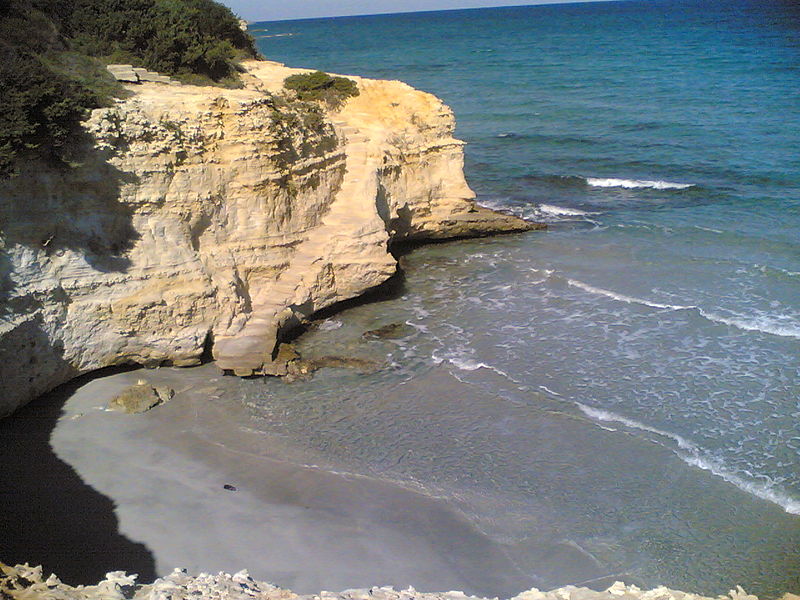
Since tomorrow Eleonora will be back from her "conference" in Conca Specchiulla (LE), this is my last chance to be independently veeeeery heavy on this blog, so I'll do my best.
Let's see, this week I told about boring and useless Dutch and Italian laws, bible related stuff and some tiresome experiences of mine riding around in Amsterdam... so what am I missing? Well... geography!
So here we go with an awesome post about one of the most stupid geographical question: why the (bloody) hell some American States are rectangular?
In fact as you all noticed (don't you?) there are two States in the USA that are rectangular (actually they are rectangles on a curved surface, so they are trapezoidal): Colorado and Wyoming (Colorado stretches from 37°N to 41°N latitude and from 102° 3'W to 109° 3'W longitude; Wyoming stretches from 41°N to 45°N latitude and from 104° 3'W to 111° 3'W longitude).
The motivation of this is clear: the borders were decided and drawn table top and at that time no one really cared of drawing more geographical borders between grasslands.
But the "funny thing" is that they are actually not perfectly rectangular (or trapezoids)!
In fact when the surveyors mapped the boundaries of these two States (using transit, compass, chronometer, astronomical readings, data from previous surveys and interviews with residents of the affected areas) they made some mistakes in marking them from milepost to milepost over distances stretching hundreds of miles.
So for example in mapping Colorado they ended up being 1 mile further they expected to be because of some irregularities. So the borders of Colorado (as well as for Wyoming) are not strictly rectangular but they present some kinks.
So even if the written description of the borders says they are rectangular, the official definition is on the ground since at that time both the Countries involved accepted it.
So for example Colorado's legal border "is a polygon formed by a series of line segments that run between physical monuments that were put in place by . . . survey parties".
Monday, September 08, 2008
The workers' city, far below the surface of the earth.

It is a dark time for the Rebellion.
Signs of an upcoming fascism are said to be seen all about Europe (not only in Italy) and this morning I had to face it. And just for a great luck I avoided my fate.
As every morning, I was gaily biking to the Centraal Station and, as every morning, I was going to park my bike on the racks behind the station that, as every morning, are already full of bikes in every position at 8:00AM.
After a couple of hopeless checks I decided to wedge my bike between two "official" spots already occupied and to lock it there (as half of the bikes in the rack).
It was then that I heard the grim noise of a circular saw on my back.
Suddenly three imperial clones from the municipal police came out and started to cut off all the padlocks from the bikes parked out of the racks and to throw them (the bikes) on a truck.
I then thought it was better to find a real parking spot, and so I did, leaving the clones collecting all the outlaw bikes (some 50 of them) and chopping the padlocks with that bloody saw of their.
When I came back from work tonight just a few bikes were still there (the ones in the right parking spots) and all around there were groups of astonished dutch; desperate people trying to figure out what happened to their bikes and throwing themselves like mad in the water. (OK, this can be a bit romanticized.)
I then took my bike and went back home, gaily, even if I almost got caught by some policemen because my front light was not working (since 2 days).
Fortunately they were busy screaming to a guy to drive his scooter (with the yellow plate!! Not with the blue one! But this is another story) on the bicycle lane.
Subscribe to:
Posts (Atom)
ShareThis


 Posts
Posts